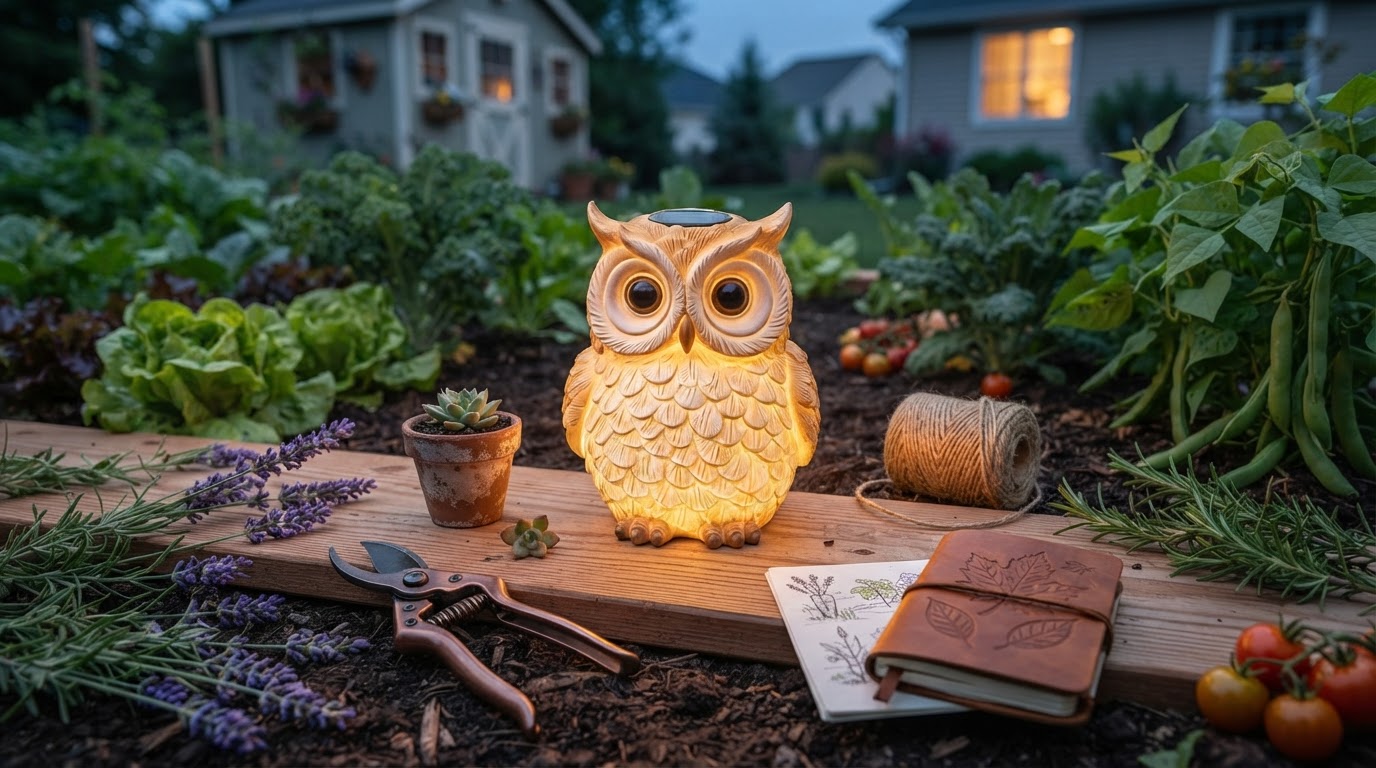
Solar Owl Light Performance in Garden Pest Management
 Jordan HaleStaff Writer
October 29, 2026. This analysis explores the functional integration of solar-powered lighting and avian mimicry for residential landscapes. It is written for homeowners seeking to balance aesthetic garden appeal with practical pest management solutions.
Standing in the center of my vegetable patch just before dusk, I watched the light shift from golden to a deep, bruised purple. The first thing I noticed was how the silhouette of the Solar Owl Light against the darkening sky changed the energy of the space; it wasn't just a lamp, but a presence. For anyone who has spent months nurturing heirloom tomatoes only to find them pecked by morning, the search for a solution often leads to a crossroads between chemical deterrents and mechanical decoys. The challenge with traditional plastic owls is their static nature, which local wildlife quickly learns to ignore. According to Dalen Products, effective decoys often require natural movement, such as wind-powered action, to maintain the illusion of a live predator. However, the modern gardener now looks for more than just a scarecrow; they look for multi-functional tools that address lighting needs while maintaining that predatory profile. In my own yard, the transition from a realistic solar owl decoy light to a more integrated system highlighted the importance of placement and light duration. The struggle isn't just about scaring away birds; it's about creating a perimeter that feels occupied. When the sun dips below the horizon, a standard decoy disappears, losing its effectiveness during the crucial twilight hours when many small mammals are most active. This is where the intersection of solar technology and biomimicry becomes essential for a healthy garden ecosystem.
It turns out that the effectiveness of the Solar Owl Light lies in its ability to bridge the gap between day and night. The unit utilizes a discreet solar panel that collects energy throughout the daylight hours, powering internal LEDs that provide a warm glow once the ambient light fades. During my testing, the resin construction felt substantial in hand, not like the flimsy, hollow plastics often found in big-box stores. The technical specifications emphasize a waterproof design, which is critical given the 2,100 search impressions for waterproof solar owl lamps recorded this season. As a realistic solar owl decoy light functions, it relies on these internal components to stay operational through rain and irrigation cycles. Somewhere around week two, I realized that the placement near my porch wasn't just for show; the light output was sufficient to illuminate the path while the owl’s physical form served as a visual anchor. The integration of motion detection and rotating heads in some models, as noted by listings on eBay, adds a layer of unpredictable movement that mimics a hunting bird of prey. For the Solar Owl Light, the focus remains on the reliability of the battery cycle and the quality of the resin finish, ensuring the decoy doesn't bleach white under intense UV exposure. This durability is what separates a seasonal trinket from a permanent garden fixture. The weight of the unit allows it to sit firmly on a fence post or be staked into the soil, providing versatility for those who need to move their deterrents frequently to prevent pest habituation.
I keep coming back to the idea that a garden should be a place of rest, not a constant battleground with nature. Choosing the right solar owl requires a framework that looks beyond the initial aesthetic. When evaluating these units, one must consider the specific environmental stressors of their local climate and the particular pests they aim to discourage. A realistic solar owl decoy light is most effective when it is part of a larger strategy of garden maintenance. The decision-making process should involve a clear assessment of light requirements and physical placement. As seen in demonstrations by creators on YouTube, the visual impact of a bobbling head or glowing LEDs can significantly alter the behavior of small birds and rodents in the immediate vicinity. To ensure you are selecting a unit that will provide long-term value, consider the following criteria:
- Verify the IP rating to ensure the housing is fully waterproof for year-round outdoor use.
- Assess the solar panel placement to ensure it can receive at least 6 hours of direct sunlight.
- Check the material density to ensure the resin can withstand high wind speeds without toppling.
- Evaluate the LED color temperature to match existing landscape lighting for a cohesive look.
- Determine if the mounting hardware is compatible with your specific garden surfaces, such as soil or wood.
- Confirm the battery capacity to ensure the light remains active through the early morning hours.
Sources
- Dalen 18in Sol-R Solar & Wind-Powered Owl Decoy Bird ...
- BEST Garden Owl?
- 25+ solar owl for sale | Updated Oct 2026